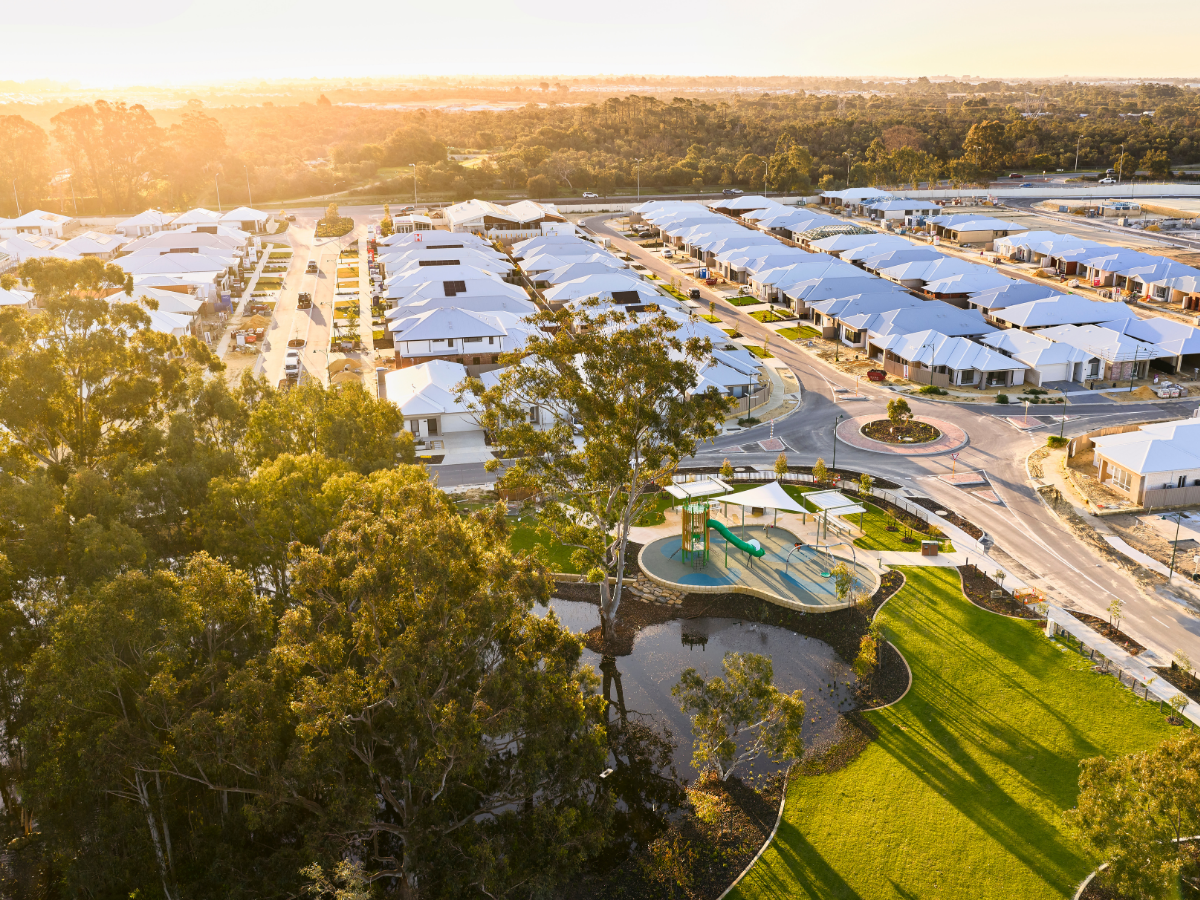
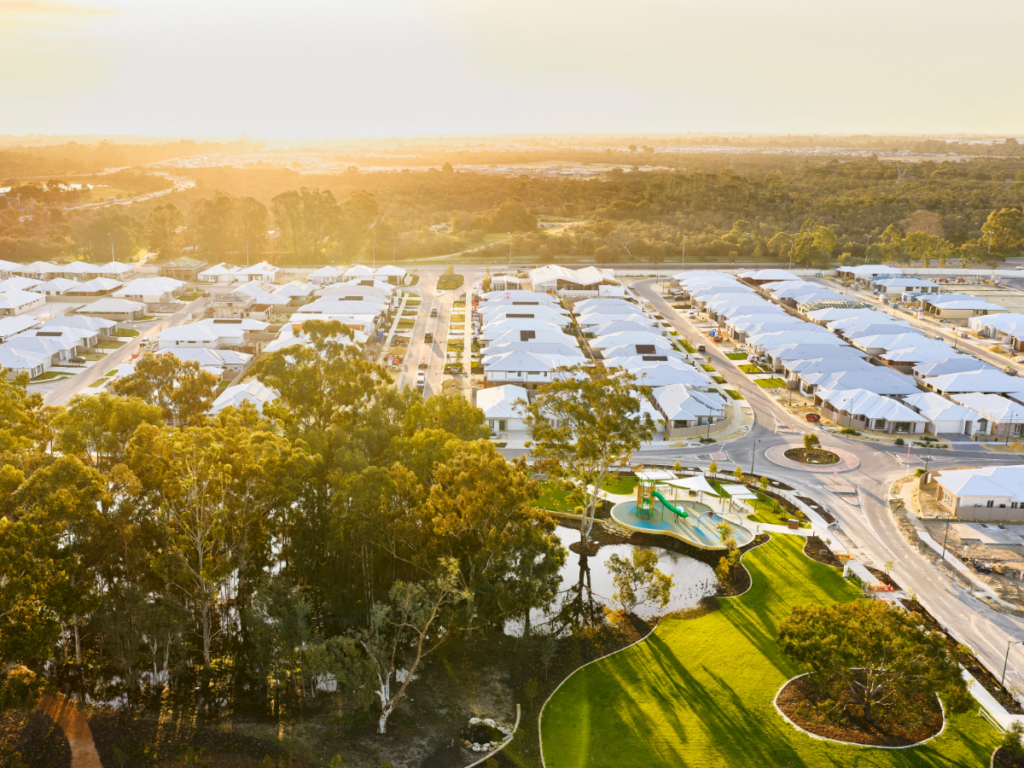
As Western Australia moves toward cleaner, healthier and more resilient ways of living, Stockland’s Wildflower Estate in Piara Waters (City of Armadale) is one of the state’s most innovative examples of sustainable urban development. As Stockland’s first all‑electric community in WA, Wildflower Estate showcases what low‑impact, future‑ready living can look like and why thoughtful design matters for both people and the planet.
At Wildflower Estate, residents are supported to build healthy, efficient and comfortable homes that reduce their carbon footprint and contribute to a cooler, greener community.
Design Essentials: Building Sustainability into Every Home
All homes in Wildflower Estate must meet a set of Design Essentials that ensure strong baseline sustainability and comfort performance. These basic standards include:
All-Electric
There is no mains gas connection for the community. Yep, you read that right. Homes are designed to run entirely on electricity. This approach supports modern, efficient appliances such as induction cooktops, heat pump hot water systems and reverse‑cycle heating and cooling. All‑electric homes are easier to future‑proof as the energy grid becomes cleaner, and they help reduce household emissions. For residents, this means simpler infrastructure, improved indoor air quality and the potential for lower running costs when paired with solar.
Climate‑Smart Shading
Each home is required to include a minimum eave overhang of 400mm on primary and secondary street facades. Eaves are also encouraged across the entire home as they:
- Shade windows
- Reduce daytime heat gain
- Moderate internal temperatures
- Decrease cooling energy demand
EV Readiness
Garages must include either a dedicated EV charging point or provision for a 16A single‑phase general purpose outlet (GPO) centrally located for future EV charging. The conduit from the switchboard to the GPO must be sized to allow an upgrade to 3‑phase supply if needed later.
Cool Roofs for Cooler Homes and Neighbourhoods
Cool roofs are essential at Wildflower Estate with all homes required to use a Colorbond colour with a solar absorptance rating below 0.45. Cool roofs help to:
- Reduce energy bills by lowering cooling demand
- Improve comfort in spaces like garages and patios
- Decrease roof temperatures, extending roof lifespan
- Reduce the urban heat island effect across the urban area


Recommended Features for Enhanced Comfort and Efficiency
Residents are encouraged to adopt additional sustainability features to further reduce energy use, improve comfort and future‑proof their homes. The recommended additions include:
Solar Panels
Solar PV systems help reduce power bills, generate clean renewable energy and ease cost‑of‑living pressures. Over time, households can recoup installation costs while gaining ongoing financial savings.
Battery Storage
Adding a battery allows residents to store excess solar power to use later, helping to:
- Increase energy independence
- Lower electricity bills
- Reduce reliance on the grid
- Improve energy security
NatHERS 7‑Star Rating
The Nationwide House Energy Rating Scheme (NatHERS) guides best‑practice home design for energy performance. Since May 2025, a 7‑star home is the industry standard under new building codes. This can be achieved through thoughtful choices in:
- Orientation
- Glazing
- Insulation
- Window sizing
- Colour palettes
Higher‑performing homes are more comfortable and deliver long‑term savings on energy bills.
Sustainable Home Rewards: Supporting Residents to Do More
To help residents adopt energy‑efficient technologies, Stockland offers a tiered incentive program worth up to $5,000. The ‘Basic, Better, Best’ promotion includes:
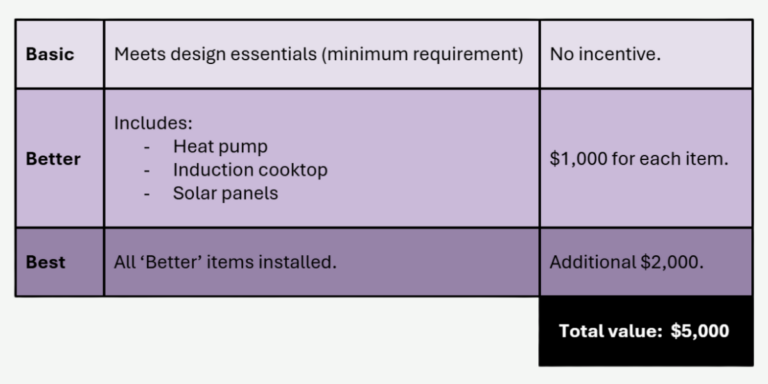
This program makes sustainable, high‑performance homes more accessible and more affordable.
Resilient Infrastructure and Environmental Design
Sustainability at Wildflower Estate goes beyond individual homes. The estate’s civil and environmental engineering incorporates:
- Efficient soil management
- Integration of green spaces
- Careful planning of essential services
Infrastructure such as water systems, drainage, pathways and communications is designed to support a walkable, connected and climate‑resilient community. Residents also benefit from close access to parks and natural spaces which is improving residents’ connection to nature. Shops, community hubs and local schools planned for the area seek to reduce car dependence and supports healthier, more socially connected lifestyles. All residents also receive a complimentary waterwise front-garden landscaping package.
A Model for WA’s Sustainable Development Future
From cool roofs and EV‑ready homes to universal design principles, renewable‑ready infrastructure and resident incentives, Wildflower Estate sets a best‑practice benchmark for sustainable residential development in Western Australia.
As WA continues to transition toward clean energy and more resilient communities, Wildflower Estate demonstrates what’s possible when sustainability is built into a development from day one.
Switch Your Thinking celebrates projects like Wildflower Estate that make low‑impact living easier, more attractive and more affordable for WA households. Stockland has another development in Beaconsfield called Nara which features eco-designed townhouses that meet similar base requirements.
Do you know of any other all-electric or highly sustainable residential developments happening in WA? If so, please let us know so we can spread the word and celebrate these stories within our community!